Comments from finance/tech guy turned novelist. Author of best seller Campusland. Follow on Twitter: @SJohnston60.
Thursday, February 24, 2022
The Rise of the DEI/ESG Commissars
Monday, February 21, 2022
The Pulitzer Prize Is a Fraud
A couple of years ago, I wrote a piece called Conservatives Don't Win Stuff. It was based on my observation that, well, conservatives don't win stuff.
This is because the Long March through the Institutions (which I also wrote about here) is over. The left now controls them all, including once rock-ribbed GOP redoubts such as the Fortune 500.
Among these many institutions are, of course, the various bodies that have anointed themselves as the "giver of awards." The Motion Picture Academy, the MacArthur Fellows (they of the "Genius" Award), the Rhodes Trust, the Nobel Committee...let's just say you'll find a clean subway car in New York before you find a conservative on one of these boards.
So be it.
But one pestiferous purveyor of these accolades deserves an extra-large, heaping pile of our scorn: the Pulitzer Prize Board.
For background, the Pulitzers have long leaned hard-left. For instance, way back in the 30s, they gave the New York Times Moscow Bureau Chief, Walter Duranty, the coveted award for his propagandistic coverage of Josef Stalin, which included some delightful reportage such as the following, about the kulaks (farmers):
"Must all of them and their families be physically abolished? Of course not–they must be 'liquidated' or melted in the hot fire of exile and labor into the proletarian mass."
Nice.
Duranty also pointedly ignored the biggest story in the Soviet Union during the 1930s, the policy-driven famine that killed tens of millions. His reporting provided intellectual cover for an entire generation of campus-based Marxist wannabes.
Duranty was so awful that the Times itself disavowed the coverage (albeit some five decades later). Can you imagine?
So, the Pulitzer people took back their little prize, right?
Nope.
Despite being formally petitioned by various groups twice, they declined to do so.
What really separates Pulitzer from the pack, though, happened far more recently, when they gave the award to both the New York Times and the Washington Post for each's "deeply sourced' and "relentlessly reported" coverage of the fanciful "Russiagate" scandal.
Of course, we now know, with 100% clarity, that the entire thing was a fraud concocted by Donald Trump's political opponents. There was plenty of reason to think this then, too, but I don't need to rehash all the details of why in this post. If you want some great reporting on just how outrageous this Pulitzer was, I refer you to this excellent piece in the New York Post.
Needless to say, the Times and the Washington Post have not returned their awards, and the Pulitzer Board had not asked for them back. All parties probably think the Russia narrative could have been true, even if it blatantly wasn't.
We're all good here.
But this got me wondering. Who's behind curtain? What kind of people would make such a horrendous mistake and not even attempt to walk it back.
One of the wonderful things about the internet is that it's easy to find out such things.
Unlike the mostly center-left Lovely People who inhabit school boards, about whom I have written, these people are committed progressives. The Pulitzer Board consists of precisely what you'd imagine: a rogue's gallery of academic, journalistic, and NGO leftists. All but one live on the coasts (the sole exception living in coastal aspirant Austin, Texas).
I present to you, the Pulitzer Board:
(Perhaps genuflect as you read these names—these people are very elite and went to very good schools.)
Elizabeth Alexander - Head of hard-left Mellon Foundation, big Obama supporter. Read her tweets here.
Nancy Barnes - Editorial Director, NPR
Lee Bollinger - President, Columbia University
Katherine Boo - former staff writer for the New Yorker and current reporter for the Washington Post.
Neil Brown - former editor of left-leaning Tampa Bay Times. Now runs the Poynter Institute, a journalism school funded in part by George Soros's Open Society Foundation. One principal area of focus is "fact-checking technology." (Cue the irony.)
Nicole Carroll - Editor-in-chief of left-leaning USA Today
Steve Coll - Dean of Columbia Journalism School, the ever-flowing wellspring of liberal journalists.
Gail Collins - Editorial Board, New York Times (Does she get to vote on the Times' own Pulitzers?)
John Daniszewski - Editor at Large for "standards" at the Associated Press. Here's a quote from his bio: "John works with journalists and editors around the world to ensure the highest levels of media ethics and fairness."
One wonders if these people have any self-awareness, any at all.
Steve Engelberg - Editor in chief of lefty online news organization ProPublica. Also won Pulitzers. Worked for NYT for 18 years.
Carolos Lozada - Washington Post book critic, author of "What Were We Thinking: A Brief Intellectual History of the Trump Era." Twitter feed: https://twitter.com/CarlosLozadaWP
Kelly Hernandez - Professor of African American Studies, UCLA. From her bio: "One of the nation’s leading experts on race, immigration, and mass incarceration." Believes we are "wasting money" on policing and incarceration. Watch her here: https://www.youtube.com/watch?v=a1kigeQAG6k.
Aminda Gonzalez: VP and Exec Editor, Simon & Schuster
Kevin Merida - Executive Editor, LA Times
Viet Thanh Nguyen - Professor of English, American Studies and Ethnicity at USC.
Emily Ramshaw - CEO of The 19th, a feminist-oriented news service. Very concerned on Twitter about the shortage of female climate scientists.
David Remnick - Editor of the New Yorker, and author of, among other things, a hagiography of Barack Obama and a recent puff piece on AOC.
Tommie Shelby - Professor of African American Studies at Harvard. Recent speech title: "Afro-Analytical Marxism and the Problem of Race."
Pro tip moving forward: these awards are nothing more than trumped up self-congratulation inside an intellectually fatuous, vacuum-sealed bubble. To the average American, they mean nothing, and nor should they. Ignore them.
Now give me a damn beer.
Friday, November 26, 2021
The Digitization of Ownership and Why It's Really Cool
Trigger Warning: this post has nothing to do with schools, CRT, or even politics. But read on to discover the incredibly cool financial market developments happening right now, but not fully understood. Note that I previously wrote about crypto developments in "Why Conservatives Should Love Cryptocurrencies."
Imagine you could own a $1,000 portfolio that looked like this:
$200 New York Yankees
$375 Picasso's Guernica
$125 Ranch land in Wyoming
$250 David Bowie's song catalogue
$100 James Bond's Aston Martin
$75 Kyle Rittenhouse's prospective legal settlements
Each of these positions represents equity ownership. Crazy? Think again, because it's coming fast. These are all assets of varying sorts and there is no reason they each couldn't have fractional ownership in the form of crypto.
You probably heard about the U.S. Constitution almost being purchased by 17,437 random people. While they didn't win the bidding, that's hardly the point. They raised $47 million in seventy-two hours. Average donation: $206. (My son was in for $180.) This was all done using crypto currency as the medium of exchange.
Nobody had to hire lawyers to set up an LLC. Nobody had to hire a management team. No intermediaries required.
They came together in the form of a DAO—a Decentralized Autonomous Organization. Basically, a bunch of people buy crypto coins, pool them, and then decide what to buy and what to do with the asset after its purchase. The more coins you own, the more votes you get.
Then there's this.
A company called BlockBar is making it possible to buy crypto coins associated with uber-expensive bottles of rare liquor. If you own a coin, it's associated with a specific bottle. You can exchange the coin at any time for the bottle itself, which is stored safely.
Let me back up a moment.
By now, you've probably heard of NFTs (Non-Fungible Tokens). They burst on the scene about a year ago. Until recently, they were just a way to claim ownership of a digital asset, say, an electronic image like this one, 3DPunks #087:
You can be the official owner of this image for the low, low price of $2100. Alternatively, you can copy and paste it, like I did.
It's easy to see why some, including me, were skeptical.
More recently, though, NFTs have represented claims on a broader range of things such as experiences, access to parties parties, membership in communities, and such.
More interesting.
But back to BlockBar.
What they are doing is creating NFT coins for tangible assets, and that's where things get very interesting. And not just tangible assets, but theoretically any kind of asset. Team ownership, legal settlements, intellectual property. Basically anything that has a value.
So, why not just own the bottle Macallan 40 itself?
Because most people who buy these bottles are investors who never drink them, and the coin is more liquid, should they choose to sell. To quote BlackBar's CEO, "You can always exchange the digital asset for the physical, but it is easier to sell the digital asset—you don't have to physically move the bottle, ship it all over the world, and have it be authenticated over and over again by auction houses selling it."
If the Constitution DAO's investors had succeeded, any of them could have sold out at any point, perhaps making a profit.
If this all has a familiar ring, it should. Once upon a time people used precious metals as currency. But lugging gold and silver around was cumbersome and dangerous, so currencies that represented a claim on metals were created. The U.S. had the gold standard as well as silver certificates. How much easier—and safer—it became to engage in commerce.
What we're witnessing now is an evolution in this concept—the digitization of ownership, all made possible by the underlying security of the blockchain. All sorts of previously illiquid assets, many of which have been unattainable but for the very rich, will soon be liquid and accessible to even the smallest investors.
Just imagine the new forms of investment and speculation this opens up. Think the Yankees just made a bad trade? Sell! Think Kyle Rittenhouse will end up owning CNN and MSNBC? Buy! Just want to brag about owning James Bond's car? Buy!
(The Kyle Rittenhouse angle is interesting, because if you think about it, anyone could sell "themselves," or more specifically, their future earnings stream. There could be an entire subsection of NFTs where you trade in the future prospects of famous people.)
Anyone with even a few dollars to invest can play in the most rarefied of markets.
Guernica
But this has benefits for the very rich as well. Let's say you currently own Guernica.
(You don't, because it hangs in the Musea Reina Sophia in Madrid, but let's assume that away.)
I'm guessing Guernica is worth $150 million, but hey, it doesn't go with your new decor and you want to sell. You'll have to go through Sotheby's or Christies and pay them 10% of the auction hammer price, or $15 million. The process will take many weeks, and the painting will have to be shipped to the auction house for authentication and viewing. It's all very time consuming and expensive.
This is why trading in and out of things like paintings really doesn't happen much. The friction is too great.
But, if your ownership were digitized on the blockchain, you could sell it tomorrow. Or, if you prefer, sell 49% and still maintain controlling rights, which means Guernica still hangs over your fireplace.
Expenses go down, liquidity goes up. These are compelling things. And they both add significant value to any asset.
Digital stock markets are already being created, such as Open Sea. Most of the listings are, frankly, digital effluence like 3DPunks #087. But tangibles will be there soon enough. Coinbase is planning an NFT market, and they may quickly become the market leader. (Full disclosure: I own shares.)
Sure, all this will take some time. Owners of things will have to decide to go digital, or they'll have to sell to DAOs. But an increasingly varied number of assets will find their way into the crypto space.
Here's hoping our regulators don't feel the need to screw it up. They tend to get very uneasy when confronted with new things they don't fully understand. Digitization is highly democratic, and decentralization is something we all should embrace, particularly conservatives and libertarians.
Digital Picasso ownership? Already here. Not Guernica, but a painting called "Fillette au beret."
Buckle up, it's going to be fun.
UPDATE (2/24/21): Making the Naked Dollar look quite prescient, a DAO is currently raising money to but the Denver Broncos.
Wednesday, November 3, 2021
The Spence-Yale Connection (or How Schools Go Woke)
Welcome Instapundit Readers!
Yesterday's Virginia results were a complete political earthquake. I can't think of a more important non-presidential election result in my lifetime. There were a number of reasons, but none bigger than parents screaming "enough!" We will not let you use our children as fodder for your social experiments.
Of course, this is a rebellion of public school parents. Private school parents are still paralyzed by the (legitimate) fear that speaking up will result in retaliation on their kids, often in the form of tepid college recommendations.
If you aren't familiar with the New York City private school scene, there's a pantheon of sorts. It includes the most sought after and expensive. Most of the schools I've been writing about in recent months are in this select group, schools like Dalton and Brearley.
Most, perhaps all, have also been experiencing an unprecedented cultural lurch to the left, particularly in the eighteen months since George Floyd. This lurch has been happening even faster in the private schools than public because there are fewer institutional roadblocks to curricular change. School leadership can just decide to make it happen. Boards usually rubber stamp things after the fact, if at all.
Spence, which is all girls, is one of the schools in New York's pantheon. As Spence's peer schools landed in the papers last year with one woke explosion after another, Spence managed to stay under the radar, at least relatively.
Oh, things had been percolating. There was the racial show trial of white high school girl for an innocent Instagram post in 2019, one the school didn't even see before the accused was hung out to dry. Other people who hadn't seen it either were offended, so someone had to pay. The parents yanked their daughters and sued.
Financier John Paulson, one of the most prominent educational philanthropists out there, also wrote a scathing letter to Spence that was later leaked, saying, "There appears to be an anti-white indoctrination that permeates many parts of the Spence curriculum."
He left the board and removed both of his daughters from the school.
Things were further amplified this June when a Spence parent, alumna, and former trustee (Gabriela Baron) wrote Spence a scathing letter that leaked and went viral. Baron was set off by a video shown in her daughter's middle school class that disparages white women. The video has a rating of TV-MA, which signifies content not suitable for minors under seventeen. Baron's letter noted the school's increased focus on race and how girls were forced to do things like make political protest signs in class. The school apologized. The teacher who showed the video remains at Spence.
I didn't report on this at the time. Some people asked me why, and that's because the story was already out there, and I didn't think the Naked Dollar had anything to add. Honestly, it's only worth blogging if you have some facts or a perspective that others might not. But I do get a lot of information over the transom, mostly in the form of, "I can't be seen speaking out about this, but please get this story out there." (Side note: some of you might actually have to take some personal risk if the culture is to be saved.)
I do get asked a lot if wokeness is a pendulum that will inevitable swing back. I don't know - there are some favorable signs, but I'm still not optimistic.
I also get asked how all this started, because while George Floyd was definitely an accelerant, wokeness was not hatched, fully formed, in May 2020. How did this disease penetrate our nation's best K-12 schools?
Like so many of our culture's bad ideas, the source appears to be the academe. Specifically, the Ivy League.
More specifically, Yale.
Back in the late aughts, Spence had a problem. They had gone several years without sending a girl to New Haven. The number I've been told is four.
This was occasion for alarm bells in Spence's marble halls. They graduate about seventy girls a year, so that means they had gone close to three hundred girls without a single getting into Yale.
While this might not be shocking for a big public high school somewhere, for a school like Spence it was. Remember, this is an elite school, academically. Also remember many of the parents were likely Yale grads. Wealthy ones, the kind who write checks. Spence's ranks would have been teeming with legacies. I'm guessing around that time, a school in that league would have expected at least a quarter of their girls to get into an Ivy. But if Yale was stiffing them, who might be next?
Something had to be done.
So, according to people I have spoken to, Spence did the logical thing: they hoofed it up to New Haven and knocked on the door of the admissions department. It is thought it was Bodie Brizendine herself, the school head, along with the college placement officer. The conversation went something like this:
SPENCE: Hey, Yale, what gives?
YALE: Sorry, who are you again?
SPENCE: We're from the Spence School? In New York? You used to love us?
YALE: Oh, right. What can we do for you? Kinda busy here.
SPENCE: Well, you don't seem to be taking any of our girls.
YALE: Our admission rate is five percent. What the hell do you expect?
SPENCE: We used to get a lot of our girls in. Did I mention this is Spence?
YALE: ....
SPENCE: Anyway, we were wondering if we were doing something wrong.
YALE: Uh, yeah.
SPENCE: Could you be more specific?
YALE: Look, Spence, times have changed.
SPENCE: Again, very sorry to be a bother, but specifics would be helpful.
YALE: Okay. Here's what we see when we look at you: you're an Upper East Side school for the neighborhood rich kids. White ones.
SPENCE: Well, that is who tends to live in our neighborhood.
YALE: Don't care. We're really not interested in white kids anymore. Unless they play a sport. Got any of those?
SPENCE: Well, we're an urban school, so it's not always that easy...
YALE: We're gonna need to see more multicultural faces, then. You follow?
SPENCE: Okay, we see your point. Our diversity numbers could be better. We'll be sure to reach out to other neighborhoods.
YALE: Yes, see to that.
SPENCE: Okay, so we're good here?
YALE: No.
SPENCE: What? We thought—
YALE: It's your curriculum. Change it.
SPENCE: What's wrong with our curriculum? We're proud of it
YALE: You're kidding us, right? We looked online. So DWE.
SPENCE: Sorry?
YALE: Dead White European. Emily Bronte? Seriously? And who the hell bothers with Latin anymore?
SPENCE: Just tell us what you need. Please.
YALE: Okay, more Maya, less Milton. You get us? Maybe hire a diversity consultant for this. We like that. And in a couple of years there's gonna be some people named Kendi, DiAngelo, and Coates. You better know that shit.
SPENCE: How could you know what's going to happen in the future?
YALE: This is Yale you're talking to lady. Why do you think you people want to get in here so bad? Now, we gotta go before they run out of poached salmon at the faculty club.
Okay, perhaps I don't have a precise transcript of the meeting, and perhaps Yale doesn't have a faculty club. But you get the idea.
Bizendine
Brizendine found herself at a crossroads. Stand up for classical education and cast a blind eye on race, or go with the flow - a flow that was becoming a torrent. I don't have to tell you which she chose. Non-white numbers soared (now nearly 40%) and Spence hired mega diversity consultant Pacific Education Group, founded by...wait for it...an ex-Ivy admissions officer.You can argue Brizendine was just doing her job, which was responding to the market. Certainly, if Spence's record with Yale (and others) had continued to suffer, her head would have been on a chopping block.
And so, Spence became Yale's dancing bear. Their numbers with Yale recovered.
But - there was an irony yet to be played out. And this is an irony being played out across the private school world right now, not just Spence...
The white parents and board members that panicked about this and jumped into the woke rabbit hole haven't benefitted at all, college admissions wise.
(Trigger warning. Here's where I'm going to say some of the quiet parts out loud.)
Sure, Spence's number may have recovered, but the white kids aren't doing any better with Yale or any of the other Ivies. If fact, they're doing worse. Turns out the Ivies just wanted the non-white kids (er, except the Asians), and were delighted to get them from the better private schools.
There's nothing wrong with this, superficially, but it certainly wasn't the plan in all those board meetings, circa 2010.
(Side note: private schools that go through 12th grade are far more susceptible to wokeness precisely because of this pressure to deliver what the Yale's want. The K-8/9 schools have some immunity to this.)
There are two paths that remain for the white kids. The first is parental donations, but they have to be HUGE. The number at Yale and Harvard, I'm told, is $10,000,000, and that's the bare minimum for guaranteed admission, assuming your kid isn't an idiot. A flat million will get your kid's file a second glance, but that's it. Below that admissions departments couldn't care less. In fact, they take pride in not caring less. They really, really don't want any of you unless they're ordered to act otherwise.
Makes me laugh when I think about all the alums fretting over whether to increase their annual donations to 10k because they have a kid coming up.
They don't care.
Look at it this way. Yale now has $42 billion dollars in its endowment. Harvard has $53 billion. It takes a lot to move the needle. They can have whomever they damn well want in their freshman class, and it's not your fourth generation kid.
The second way in is sports. They still need to fill those teams (pesky alums insist!), so if your kid is a great athlete with great grades and scores, he/she's got a shot. This fact has fueled the careers of a thousand squash and fencing coaches. But don't kid yourself: Ivy sports are Division I (save football).
I spoke to a number of Spence community members before writing this. Some no longer want anything to do with Spence. Others still care deeply for it, and point out that Spence is not "as bad" as those Daltons out there, at least where wokeness and racial divisiveness are concerned.
I can't say for sure whether that's the case or not, although I can say that's setting an awfully low bar. And to those parents still holding out hope, I would point out the following: even the best of schools can fall to CRT in a single year, and you don't get them back. It all comes down to leadership, and Spence's is about to change.
After about fifteen years, Brizendine is stepping down. Spence has hired someone named Felicia Wilks from the Lakeside School in Seattle. She may be wonderful. But consider that she once ran her school's DEI Department, and when asked in a videotaped interview whom she was reading, the first person she cited was Ta-Nehisi Coates, a leading purveyor of white supremacy alarmism.
I'd be delighted to be wrong, but these are not encouraging signs.
As always, I want to call out the Lovely People, in this case Spence's Board of Trustees:
William Jacob III President
Anand Desai Vice President
Kimberly Kravis Vice President
Akuezunkpa Welcome Vice President
Arthur Chu Secretary
Stacey St. Rose
Dana Wallach Jones
Ellanor Brizendine
Heather Berger
Hannah Overseth Bozian
Michael Clifford
Vanessa Cornell
Erica Desai
Joseph Drayton
Carlos Fierro
Judith Joseph Jenkins
Alexis McGill Johnson
Meredith Lipsher
Bryce Markus
Ahrin Mishan
C. Cybele Raver
Anya Herz Shiva
James Shulman
Jose Tavarez
Daryl Wout
Sunday, September 26, 2021
The Real Problem of Roe v. Wade (It's Not What You Think)
Forward: The Texas abortion law has thrust the abortion issue back to the forefront of the culture wars, and, for some, it might seem inappropriate for a white American male in his early sixties to be commenting. If you're one of those people, I ask for your forbearance, because this column is not an attack on the right to choose. Nor is it a defense of it. Rather, it is an exploration of how, as Americans, we got to such a divisive place.
Ever wonder why you never hear about abortion protests - for or against - in other countries? Seriously, think about it. Where are the mass marches in India or Brazil or Morocco? They happen, once in a while, but it's nothing like the constant frenzy that the issue provokes in the U.S.
Why is that?
I thought it would be interesting to research abortion laws around the world. Would I find clues to the silence? What I found was interesting.
Abortion was legal in exactly zero countries until North Korea legalized it in 1950 (probably to cut the number of mouths to feed). Later in the 50s it was followed by a number of other communist nations such as the Soviet Union, and then in the 60s Cuba. The first Western nations to follow suit were the Netherlands and the U.S. in 1973.
Today, abortion is widely available, even in Catholic countries like Ireland and Italy. In fact, there are only five countries out of 199 that bar abortions in all circumstances: Abkhazia (yeah, I'd never heard of it either), El Salvador, Honduras, Nicaragua, and Vatican City.
Here's where it gets interesting. Do you know how many countries have full abortion-on-demand, regardless of circumstances?
Four.
That's it.
They are: Canada, North Korea, South Korea, and the United States. Virtually every other country allows abortions, but with gestation limits.
Liberal Denmark, that other early-70s abortion pioneer is twelve weeks. France? Fourteen weeks. Sweden? Eighteen weeks. Hey, how about Mongolia? Fourteen weeks.
The world average is about thirteen weeks.
The global consensus seems to be: the later a pregnancy is terminated, the bigger the tragedy. Aborting an eight-month-old fetus is a morally worse thing than aborting a lesser-formed, two-month one.
Of course, there's no celestial arbiter that can say this is true, at least not one we can speak to. It is just how most countries have decided they feel about the issue, and they crafted their laws through democratic consensus. The message to women: if you're going to do this, our societies will allow it, but it must be early in your term.
These countries represent every conceivable religion and political system, yet they arrived at remarkably similar positions. The majority are democratic, so they got there through democratic consensus.
America did not, and that's the problem. We arrived where we are through judicial fiat, otherwise known as "Roe v. Wade."
That Roe was a horrible decision, Constitutionally speaking, is understood by all serious judicial observers. Justice Blackmum made up a Constitutional right to privacy out of whole cloth - in this case, the 14th Amendment - because he needed some thin reed on which to achieve a policy outcome the Burger Court clearly wanted. In reality, the Constitution is silent on abortion and the right to privacy, which means our fifty states should be able to decide the issue for themselves.
Just because Roe was bad jurisprudence doesn't mean many weren't quite happy with the outcome. The ends justify the means, if you convince yourself the ends are important enough.
But there have been consequences to legalizing abortion via judicial fiat rather than the ballot box.
Once abortion became the province of the courts, the issue could no longer be addressed through democratic negotiation. It became an all-or-nothing proposition in the courts. Positions on both sides hardened, particularly among the culture warriors and the PACs. You had to be for unlimited abortion-on-demand, or against any abortion, anytime. Even the slightest concession was viewed as the slippery slope, the dam bursting. Nuance and compromise became impossible. Many people became one issue voters.
Now, we live in a highly polarized culture and Roe, more than almost anything, is a root cause. Abortion has been weaponized by both parties. We also have high stakes dramas around every new court pick. It was never like that before Roe.
I believe most Americans have a view on abortion closer to the Swedes and the Mongolians. The problem is, the court took away their power to decide for themselves.
Roe should be overturned not because abortion is evil. It should be overturned because it's bad law.
But what happens then? To hear the hysterical left talk about it, the world will come to an end, and no woman will ever be able to terminate a pregnancy.
That won't happen.
Even before Roe, twenty states permitted abortions (under varying circumstances). That was fifty years ago, in a far more culturally conservative era.
Legislation would be passed very quickly in most states. My guess is that fifteen or twenty would continue with our current policy, and the remaining will have gestation limits. And while it's possible, I doubt any states would opt for a complete ban. What do I base that on? Texas, one of our most conservative states, went with a six-week limit. (This is admittedly very short, but it's what their duly elected representatives wanted. It can be changed if it doesn't prove popular. The will of the people has to matter.)
And what if you're a woman, and your state's laws don't work for you? Well, I'm not suggesting this is convenient, but you can always drive a few hours to the next state. Anything that important to your life should be worth the inconvenience.
Ultimately, things will calm down. My evidence for this? The rest of the world.
The problem is, Democrat operatives, and even a few Republican ones, don't want this. A lot of money is raised on the back of the abortion wars. In the wake of Texas, abortion will likely dominate the 2022 midterms, just as it's quickly dominating the Virginia governors election, coming in a few weeks. This is unfortunate, because there are so many other things we need to be talking about.
You will notice I haven't offered my own opinion on abortion, and that's because it's besides the point. The point is that we've approached this issue in the wrong way. Roe wasn't just a horrible decision, constitutionally, it was a significant progenitor of today's culture wars.
Time for it to go.
Tuesday, September 21, 2021
The Fallacy of Credentials
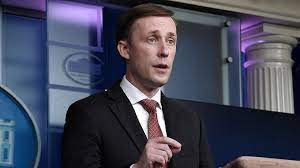
For your consideration, I give you Jake Sullivan.
Sullivan, as a reminder, is Joe Biden's National Security Advisor. He is a mere forty-four years old. But what a resume!
- Sullivan went to Yale, where he was an editor of the Yale Daily News, graduated summa cum laude, was Phi Beta Kappa, and was awarded the Snow Prize as the single best scholar in his class.
- Upon graduation, he was offered both Rhodes and Marshall Scholarships. He went with the Rhodes.
- From Oxford, it was off to Yale Law School, where he was an editor on the Yale Law Review.
- From there, Sullivan clerked for Stephen Breyer on the Supreme Court.
I'm even leaving out some stuff. Credentially speaking, Jake Sullivan sits at the very pinnacle of the American establishment. Resumes don't get much better.
And you know what? None of that means a damn thing, because Jake Sullivan is an idiot.
Oh, I don't deny that Sullivan is book smart, and likely has a capacity for hard work. Once, a generation or two ago, you would have said, "Wow, this is a crazy-smart guy." But now all his resume says is, "I have marinated my entire life in the progressive establishment, and am now a card-carrying member of America's liberal elite."
It hardly merits mentioning that this has left Sullivan without the capacity for common sense. He has presided, in various capacities, over the following foreign policy disasters:
Libya, Syria, Ukraine, Iran, Myanmar, and now, of course, maybe the biggest foreign policy catastrophe in collective memory, Afghanistan.
Jake Sullivan is not alone. I'm picking on him because, well, he's just such low hanging fruit. Our nation's elite institutions are turning out scores of Jake Sullivan's. (England, too - check out the Rhodes winners. 100% social justice warriors.)
But when a tenured Cornell professor calls black holes "racist," when Harvard holds a separate graduation for blacks, when Yale bans calling anyone a "master" of something, seriously, what do you expect? Kids with street smarts or basic common sense?
The institutions that we have traditionally placed on the top of our cultural pedestal - the ones that award all those coveted credentials - are now the most corrupt. They have become radical left-wing echo chambers where ideological adherence is rewarded and dissent swiftly punished. Social justice has replaced the search for truth as the over-arching guiding principle. Debate and free inquiry have all but vanished, because both imply there's more than one acceptable viewpoint. Students rising through this system are never truly taught how to think, merely what to think (to quote my friend, Andrew Gutmann).
Such inflexible minds are destined to fail when let loose in the messiness of the real world, where solutions require mental agility, reason, and common sense. They require one to think through different options and to consider the perspective of others. It was almost deliciously revealing that the very week Afghanistan fell, our embassy there was flying a gay pride flag (as encouraged by another credentialed idiot, that Princeton grad with a chest full of meaningless ribbons, Mark Milley).
One wonders if Jake Sullivan realizes just how useless all his credentials are. Just kidding, because there's no way he does. That was rhetorical musing on my part. Jake Sullivan will continue to burnish his resume. Our finest universities will heap honorary degrees upon him and ask him to speak at graduations. The media will exalt him. High paying sinecures and book deals await him when he leaves government service. Perhaps he'll even win an Emmy like Andrew Cuomo.
Guys like Jake Sullivan fail in only one direction - up.
Friday, August 27, 2021
Joe Biden Just Made the World a More Dangerous Place
My contributions to Naked Dollar have long been sporadic because I only write something when I think I have something to say that isn't already being said by a thousand other people. This doesn't happen every day. So what could I possibly add to the debacle in Afghanistan?
Since everything is so chaotic, and developments are happening literally by the hour, I don't see enough people considering the medium and long-term ramification, and they are not pretty.
The short version is that Joe Biden has made the world an immeasurably more dangerous place than it was a month ago.
What we can look forward to in the medium term is this: the Taliban will keep some number of Americans as "guests," saying it's for their own "safety." Then, they will create a special new "exit visa" that the American government will have to pay to extract each guest. Ten million a head. Or a hundred million. Perhaps a billion? The Taliban follow the news, and they know full well that Biden is about to spend trillions of dollars of money he doesn't have. What's another hundred billion or so?
He will pay it, of course.
But here's what comes after.
The Chinese and the Russians will start bidding aggressively for the Taliban's affections. Their largesse will not come with strings attached like gender equity mandates. “Want to make sex slaves out of 12-year-old girls? Have at it, Mustaffa…”
The Taliban, not being stupid, will play these two powers off each other to maximize their riches. This is on top of the billions Joe Biden will have already sent over in ransom (perhaps even on palettes). To the highest bidders, the Taliban will also auction off the most desirable American weapons of war, especially those “smart” systems with our proprietary software management programs. Everything will be reverse engineered down to the last screw and line of code.
Eventually, either China or Russia will become the Taliban's key strategic partner. My money is on China, because they are eyeing Afghanistan's mineral wealth, particularly the lithium deposits and critical rare earth minerals that are important elements in technology products. They will build Afghanistan all sorts of nice things in exchange for lots of strategic resources that a bunch of stone age tribes couldn't care less about, but that we, and the Chinese, care a great deal about.
But that's not even the bad part. China has demonstrated its clear interest in destabilizing the West by any means possible (same with Russia, should they come out on top). They do not view us as partners in growth. They are communists, so everything is zero sum. The problem is that militant Islam also wants to destabilize the West. Interests are aligned.
So, here's how it plays out. China will quietly encourage 9-11-style attacks on the West, but this time, it won't be box cutters. The Taliban/ISIS/al Qaeda - whomever it is, but let's face it, they're all basically in bed together where the West is concerned - will be able to choose from a robust set of tactical options. Want some bio weapons, perhaps some anthrax? How about some high-tech drones to deliver the anthrax down Broadway? Or maybe use some “cyber weapons” to attack America's infrastructure?
It's a perfect scenario for China, because Muslim extremists will be more than happy to take credit. China will lurk in the background, claiming ignorance. Everyone will know their involvement, but it won't matter. The Western media will cover for them, just like they've covered for the Wuhan Virology Lab and the WHO. Joe Biden, if he's still president, will firmly do what he's told by all the monied interests like Nike, the NBA, Hollywood, etc., and deny China's culpability. (And let's not forget that $1.5 billion investment in Hunter's "hedge fund").
But it's not just China.
The rest of the world, too, has taken Joe Biden's measure and found him wanting. A weak man, years beyond his even-then-limited mental capacity. Feckless, yet stubborn. Committed, like Obama before him, to an American decline that he not only sees as inevitable, but necessary, desirable even. Thus, he has deliberately created an immense and sudden vacuum in the state of global affairs, and nothing could be more dangerous.
(Worth remembering: in the early sixties, Khrushchev took Kennedy's measure when they met in Vienna, and that gave us the Cuban Missile Crisis.)
Plans are being hatched by bad people everywhere. China will no doubt send "peacekeeping" troops into Taiwan, annexing it as they have Hong Kong. Iran is casting a malicious eye towards Israel. North Korea? Who knows what they might pull in the face of an America withdrawing from the stage. Even smaller players like Cuba and Venezuela must be considering ways to make mischief.
Not all scenarios will play out, but some will, and the result will be violence and American lives lost, followed by less freedom in the world. Worse, we will not be able to rely on our partners. They are spitting mad over the way we handled Afghanistan and will not readily follow us into the breach next time.
We are entering a very, very dangerous time in human history, one that could have been avoided altogether if not for the ineptitude and moral failings of someone the majority of America willingly voted for.
Joe Biden, the Great Unifier, has become the Great Destroyer.
Pro Tip: buy stock in defense contractors.